
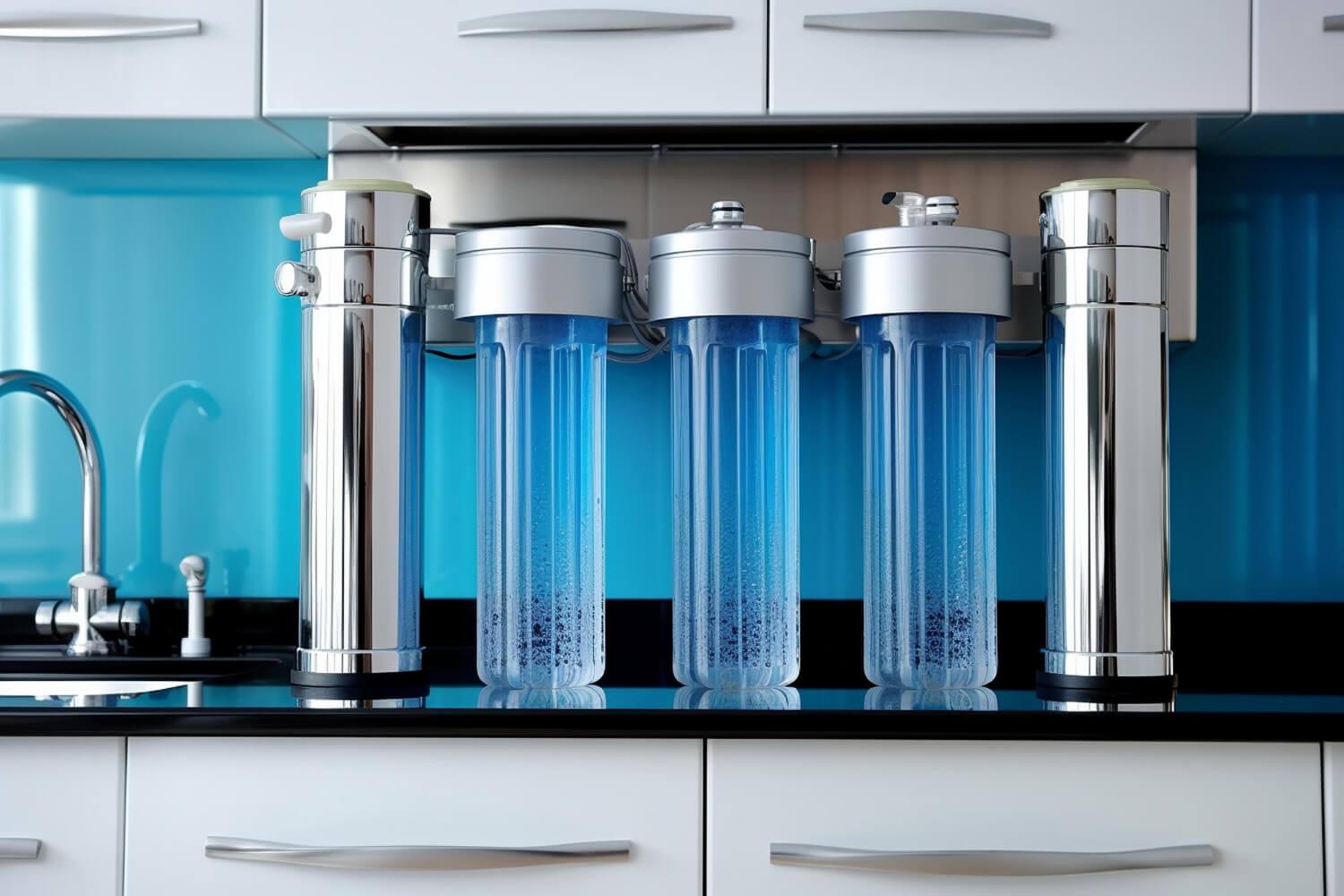
The quality of tap water is not always up to safety standards. It may contain chlorine, heavy metals, rust, and other contaminants. Modern water filtration systems help remove impurities, improve taste, and ensure your family has access to clean drinking water. In this article, we’ll explore which water filtration system to choose and which option is best for your home.
1. Why Do You Need a Water Filtration System?
Clean water is essential for your health. A filtration system helps to:
- Remove harmful contaminants (chlorine, iron, heavy metals).
- Improve water taste and odor.
- Protect household appliances from scale buildup.
- Prevent toxins from accumulating in your body.
2. Main Types of Water Filters
There are several types of water filtration systems, each designed for different purposes.
1. Under-Sink Water Filters
- Installed under the sink and connected to the water supply.
- Filters water through multiple cartridges.
- Pros: Fast filtration, removes chlorine and sediments.
- Cons: Requires periodic cartridge replacement.
2. Pitcher Filters
- Simple and easy to use.
- Ideal for small households.
- Pros: Affordable, portable.
- Cons: Slow filtration, frequent cartridge replacement needed.
3. Reverse Osmosis Systems
- The most effective water purification method.
- Removes bacteria, viruses, salts, and heavy metals.
- Pros: Provides the highest level of purification.
- Cons: Expensive, requires connection to drainage.
4. Whole House Water Filters
- Installed at the water main entry point.
- Filters all water entering the house.
- Pros: Protects plumbing and appliances from sediment.
- Cons: Does not remove fine contaminants like bacteria.
5. Activated Carbon Filters
- Uses activated carbon to remove impurities.
- Improves water taste and removes organic compounds.
- Pros: Effective at removing odors and chlorine.
- Cons: Does not eliminate bacteria or viruses.
3. How to Choose the Right Water Filter?
Consider the following factors when selecting a filtration system:
- Water quality – Conduct a water test to determine contamination levels.
- Daily water consumption – An under-sink filter is suitable for a small family, while a reverse osmosis system is ideal for larger households.
- Budget – Pitcher filters are inexpensive, while reverse osmosis systems require a higher investment.
4. How to Install a Water Filter?
The installation process depends on the filter type:
- Pitcher filter – No installation needed; simply fill with tap water.
- Under-sink filter – Mounted under the sink and connected to the waterline.
- Reverse osmosis system – Requires connection to the water supply and drainage.
- Whole house filter – Installed at the main water inlet.
When Should You Call a Professional?
Some water filtration systems require complex installation. If you’re unsure about the process, it’s best to hire an expert. ProFixLA provides professional water filter installation services in Los Angeles.
Contact Us!
- Phone: +1-747-488-0847
- Telegram Chatbot: ProFixLA Bot
- Website: ProFix LA